



Different Types of Vice
Buying a Vice – Tips from and with Tobis Handcraft
Tobis Handcraft explains what really matters when buying a vice – and which crucial factors many DIY enthusiasts and professionals often overlook. A direct comparison of different models examines key features in detail, including jaw width, clamping depth, material quality, workmanship, handle length and leverage.
The comparison at Brockhaus HEUER in Plettenberg, itself a leading vice manufacturer, explains the differences between various vices in detail, from cast-iron vices to high-quality forged-steel vices.
The clear explanations help you avoid buying the wrong product and find the right vice for your workshop, hobby or professional applications. If you are looking for a durable, high-performance vice, you will find valuable tips and a well-founded overview of the most important buying criteria here. Ideal for anyone wanting to compare quality, functionality and value for money.
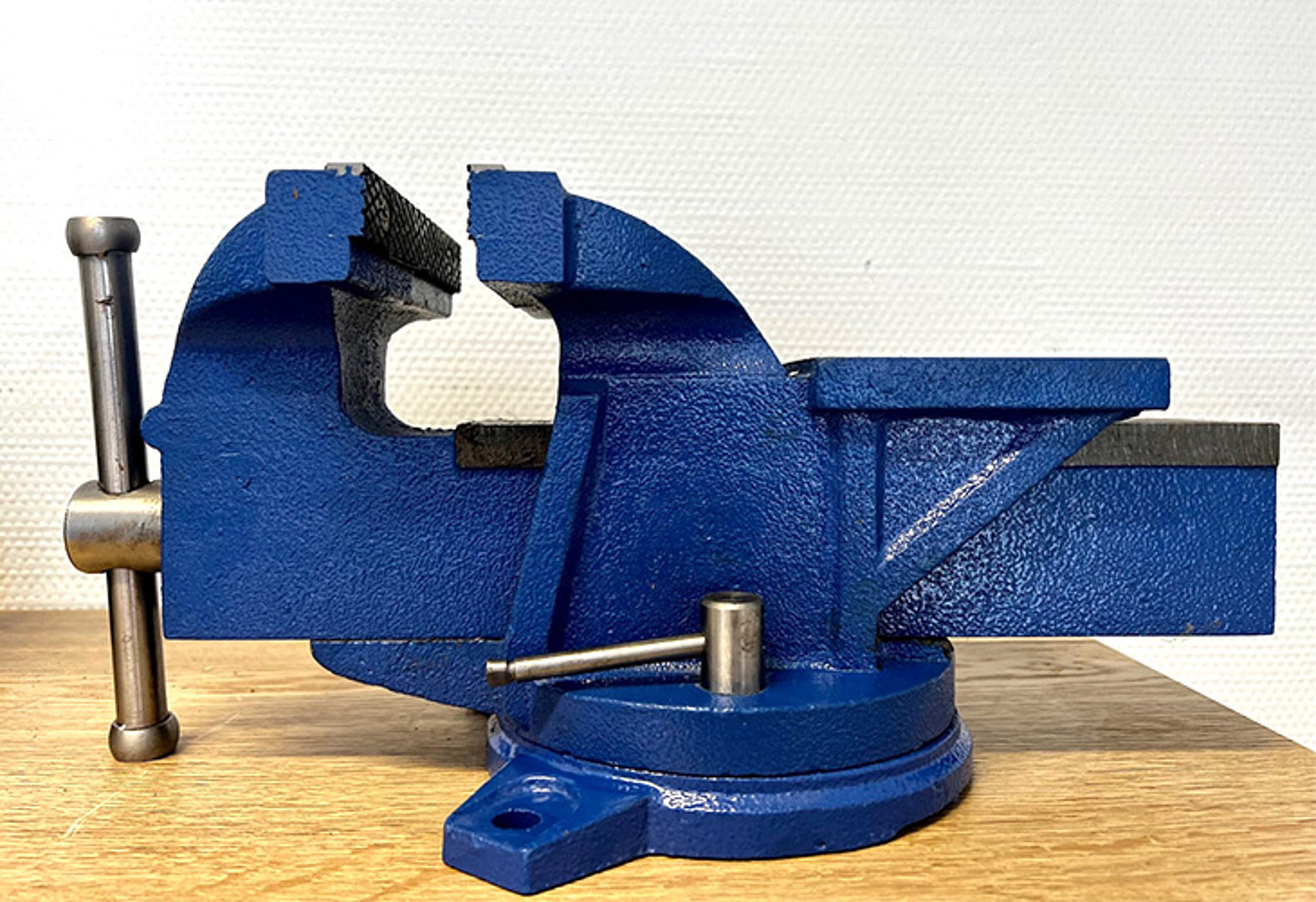
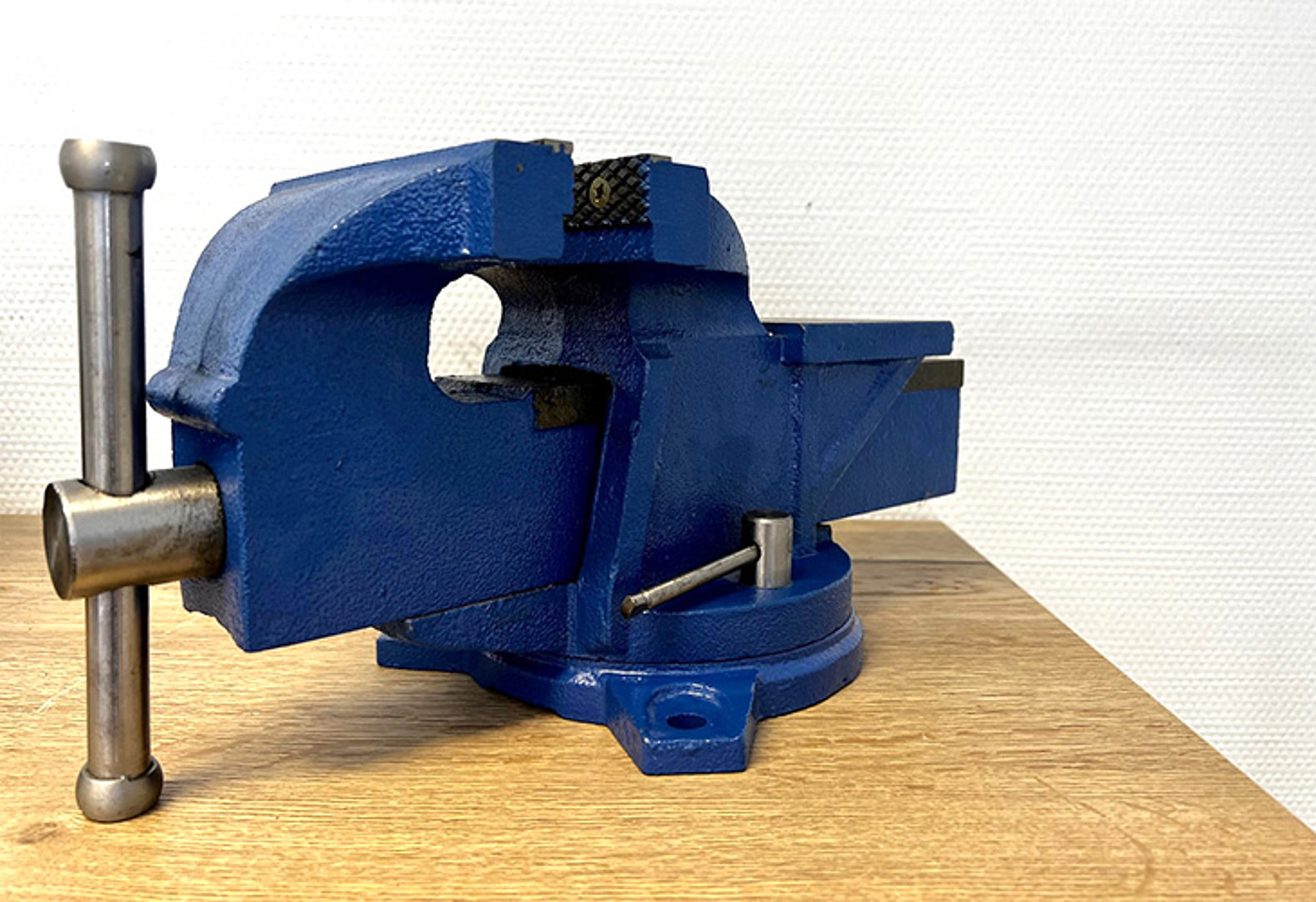
Grey Cast-Iron Vice with Rectangular Guide, Imported from Asia or India
This type of vice is made entirely from grey cast iron. This makes it very cheap to manufacture, but compromises its strength.
Because of the manufacturing process (grey cast iron), air pockets (casting cavities) may occur within the material. As a result, the vice can break more easily than a forged product. Cast vices are therefore often considerably larger and heavier in order to withstand even moderate clamping forces. One clear indication, as shown here, is the comparatively short spindle handle. The shorter the handle, the less force the user can apply.
The guide on this vice has considerable play and cannot be adjusted.
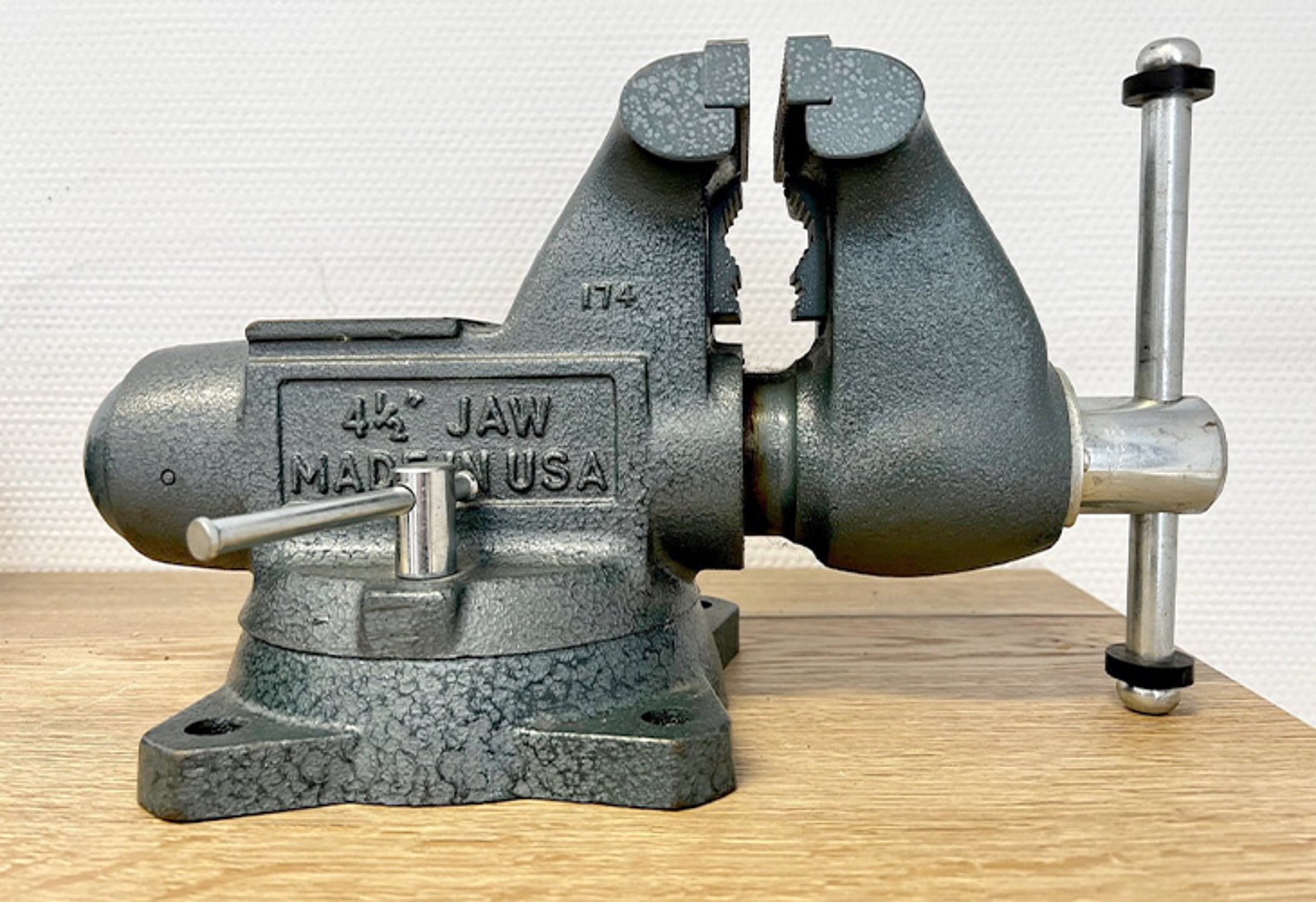
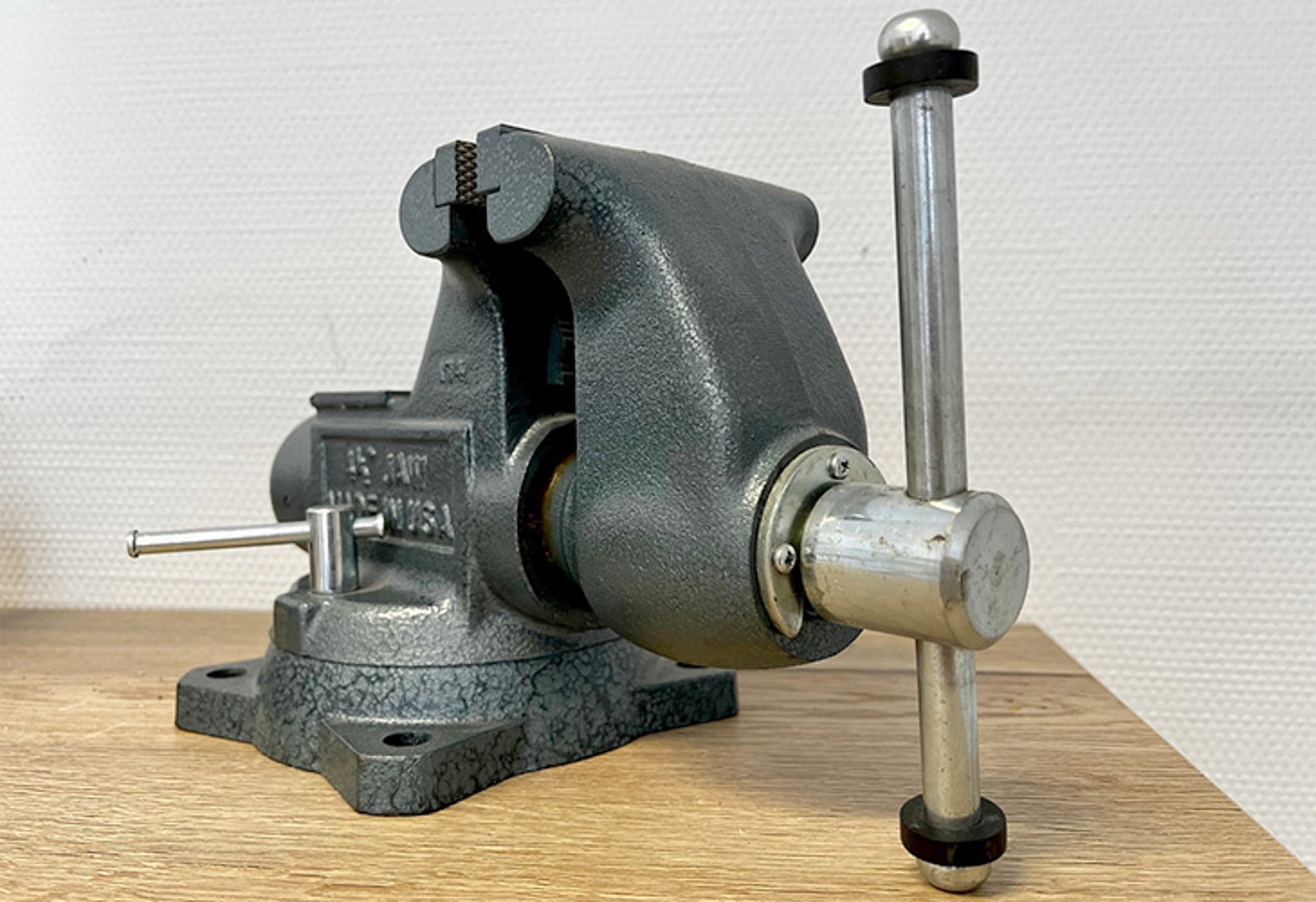
Grey Cast-Iron Vice with Round Guide
Because of the manufacturing process (grey cast iron), air pockets (casting cavities) may occur within the material. As a result, the vice can break more easily than a forged product. This vice is therefore also bulky and heavy in order to withstand the required clamping forces.
It uses a round-tube guide which cannot be adjusted.
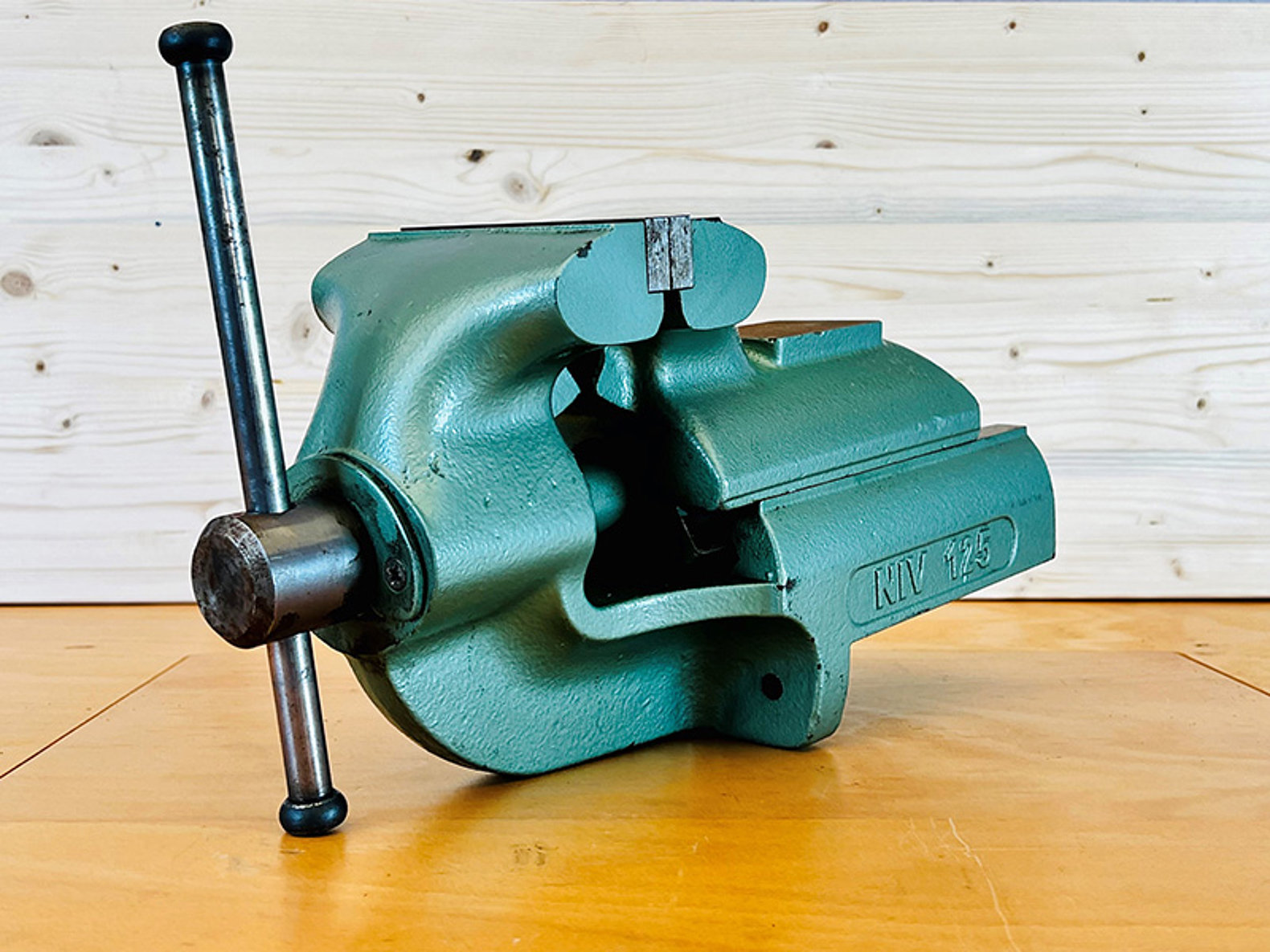
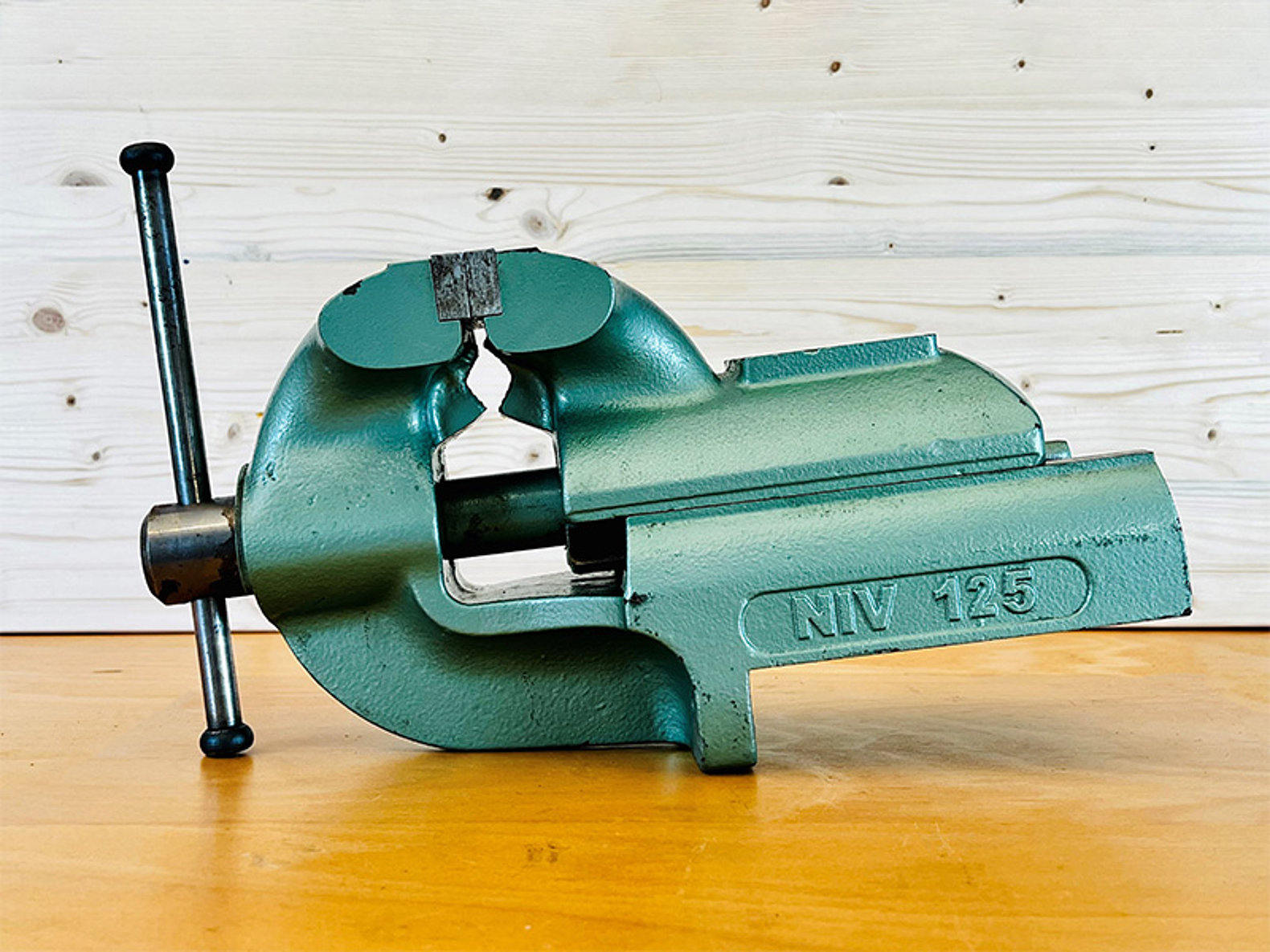
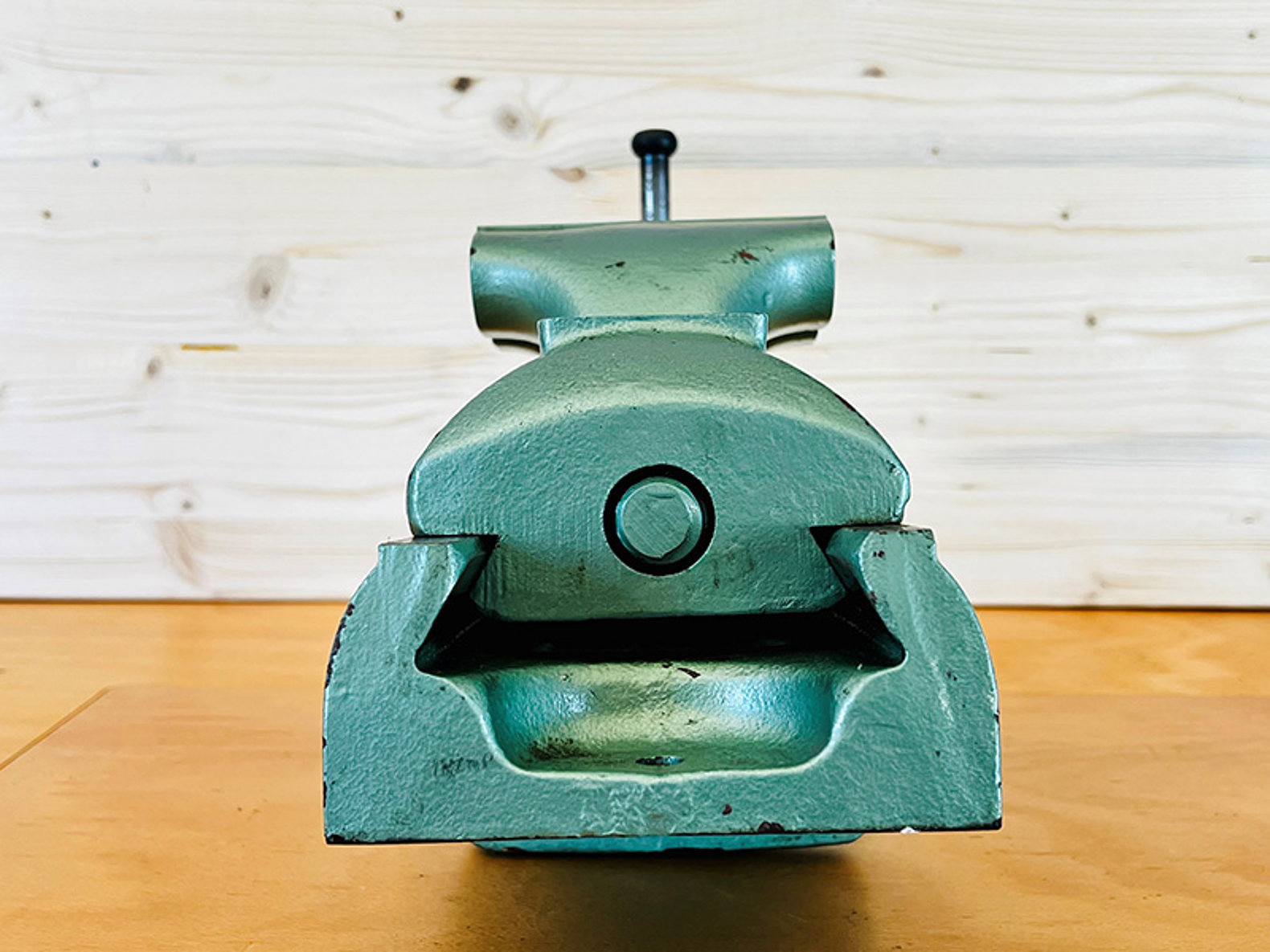
Grey Cast-Iron Vice Opening Away from the User
This vice is also made from grey cast iron. It weighs almost twice as much as a forged-steel product.
One of the key distinguishing features of this model is that it opens towards the rear. When the spindle is turned, the rear jaw moves away from the user. This limits the ability to clamp long workpieces vertically, as the workbench may get in the way.
The guide system uses a dovetail guide, which cannot be adjusted.
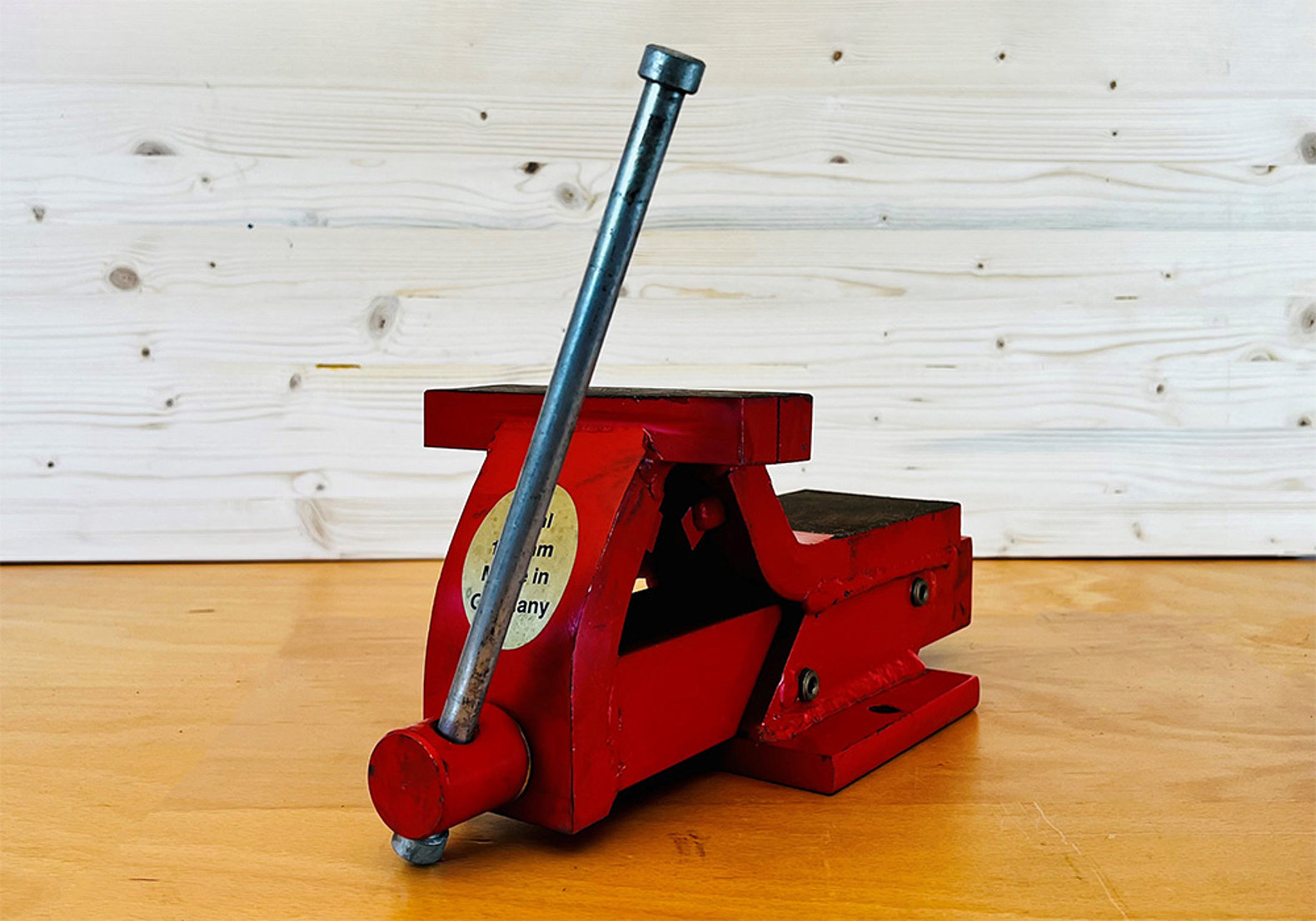
Vice Welded from Basic Steel Components
This vice is welded together from basic steel components. Both the guide and the spindle have considerable play. The guide consists of a U-section. As a rule, these vices do not have an adjustable guide and therefore tend to wobble. The model shown here can be adjusted on one side using two grub screws, but this causes the front jaw to shift sideways.
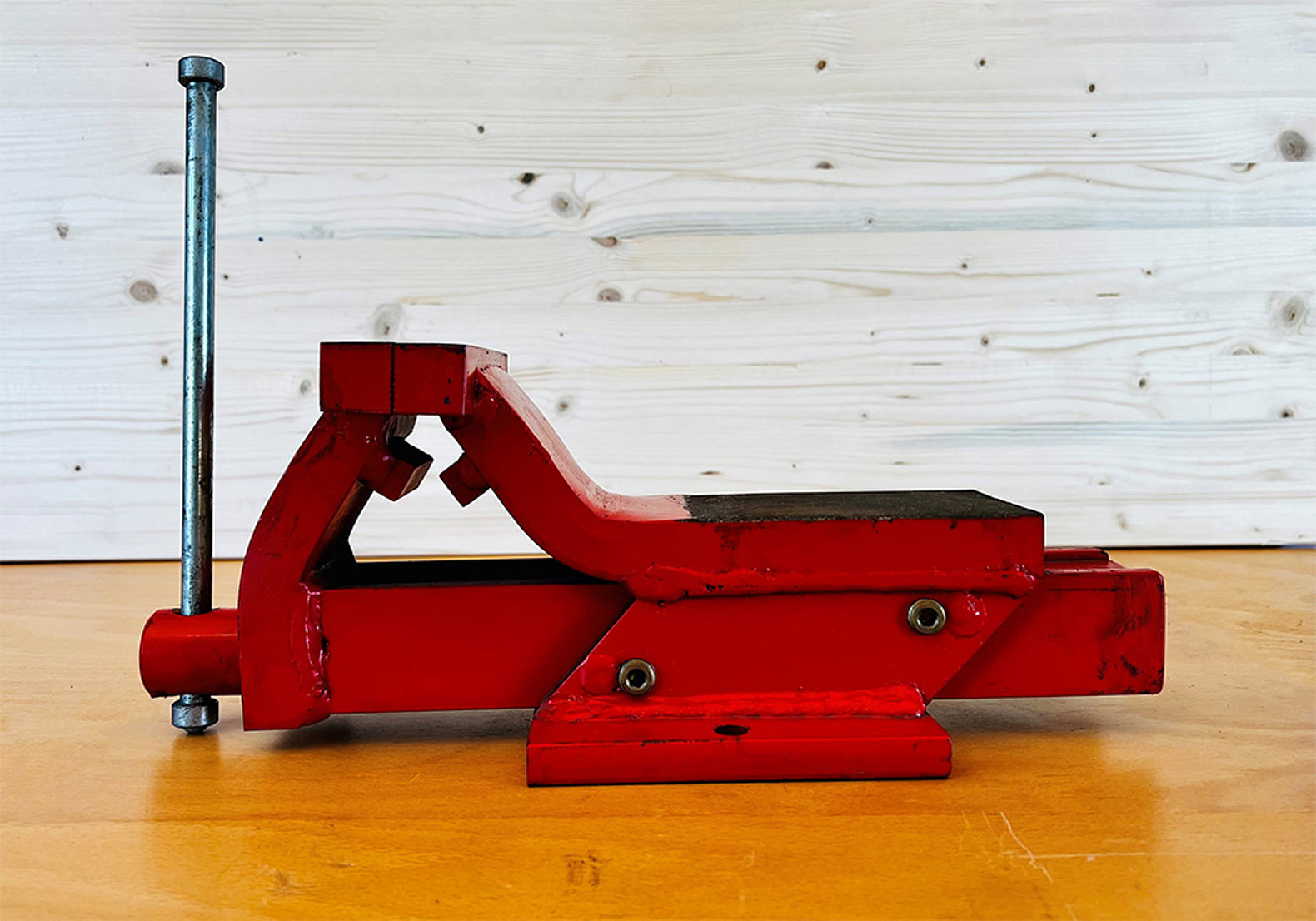
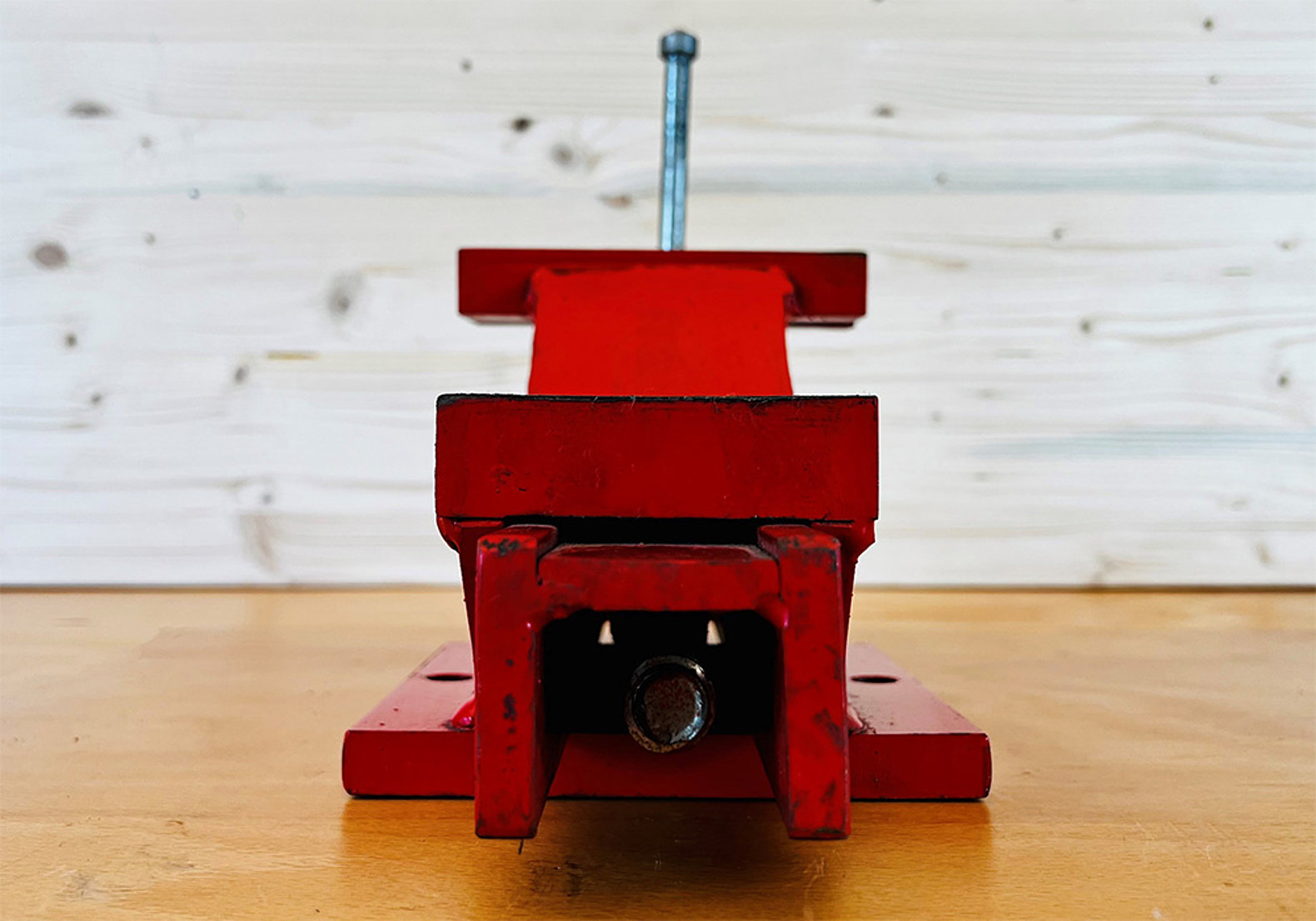
Vice Made from Forged and Sheet-Steel Components and a U-Section, with or without an Adjustable Guide
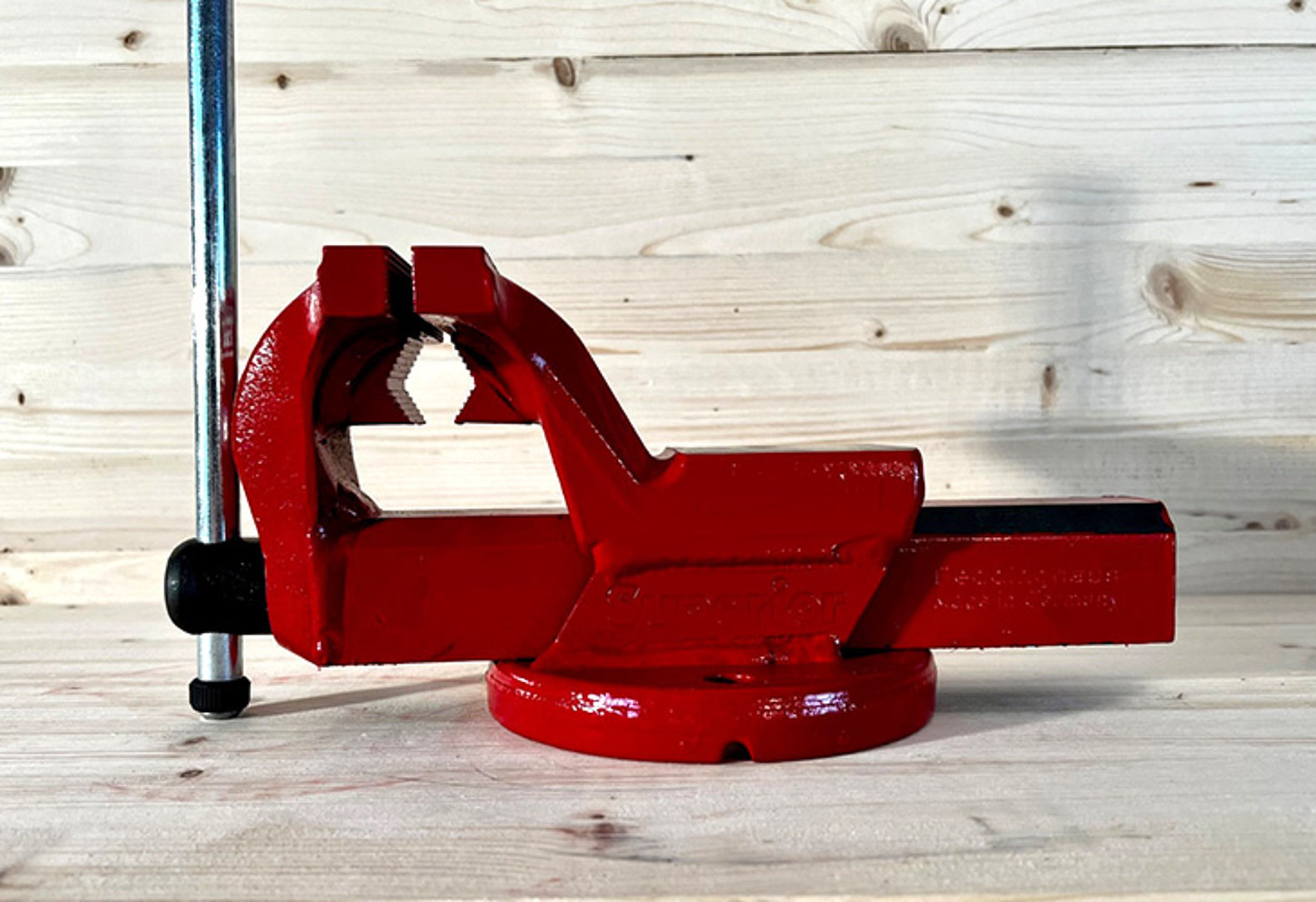
This vice model has forged front and rear jaws. The guide rail consists of a U-section, while the guide brackets are made from simple sheet-steel components welded to a round steel plate that forms the base of the vice.
In some cases, the guide cannot be readjusted.
The guide surfaces are exposed at the top and can therefore easily become contaminated or damaged by swarf, grinding dust and welding spatter. Because the guide and spindle are positioned low down, optimum distribution of the clamping force is generally not guaranteed. These products are also generally no longer made in Germany and often come from outside Europe.
Find out more about the Peddinghaus Matador Superior vice.
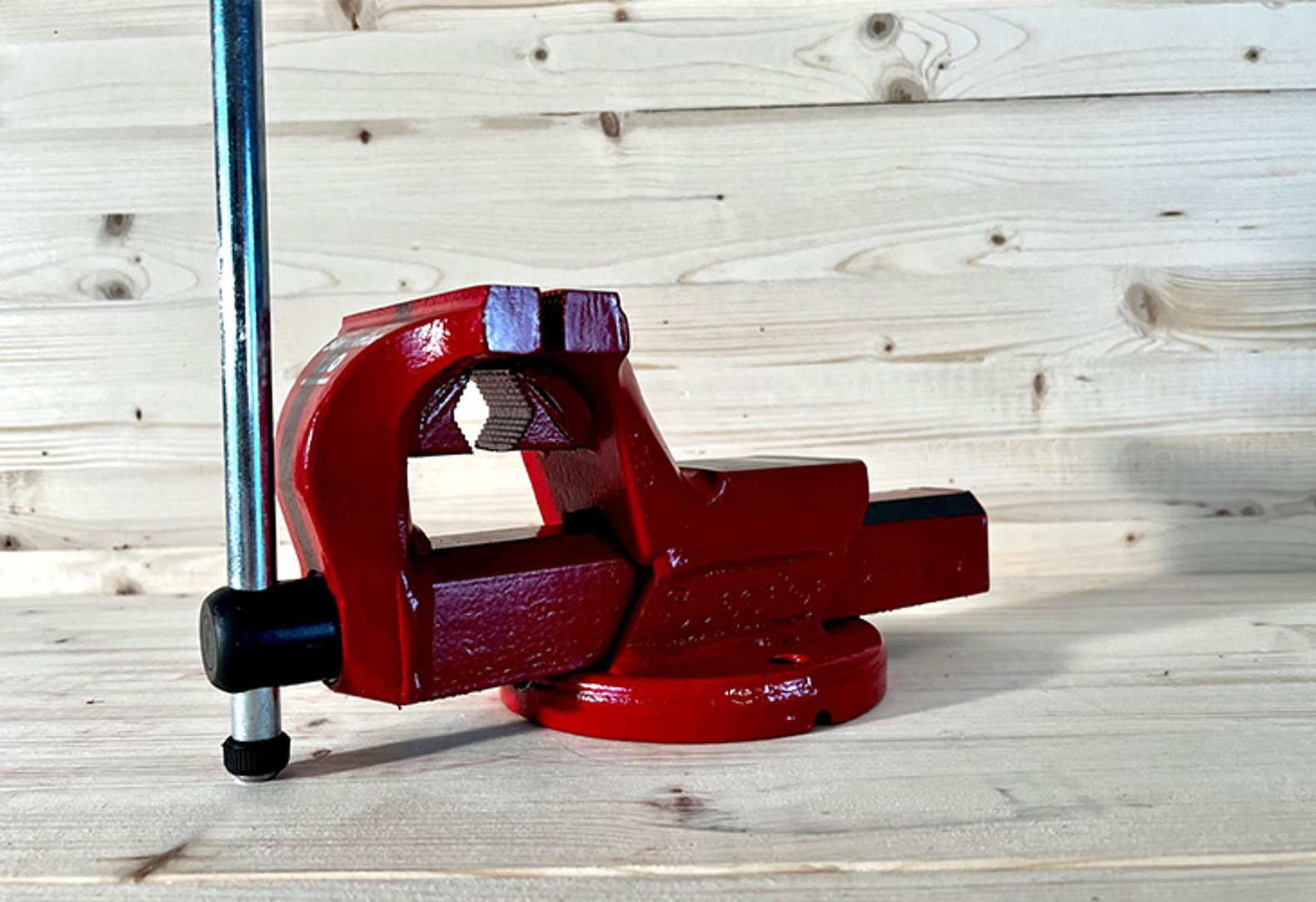
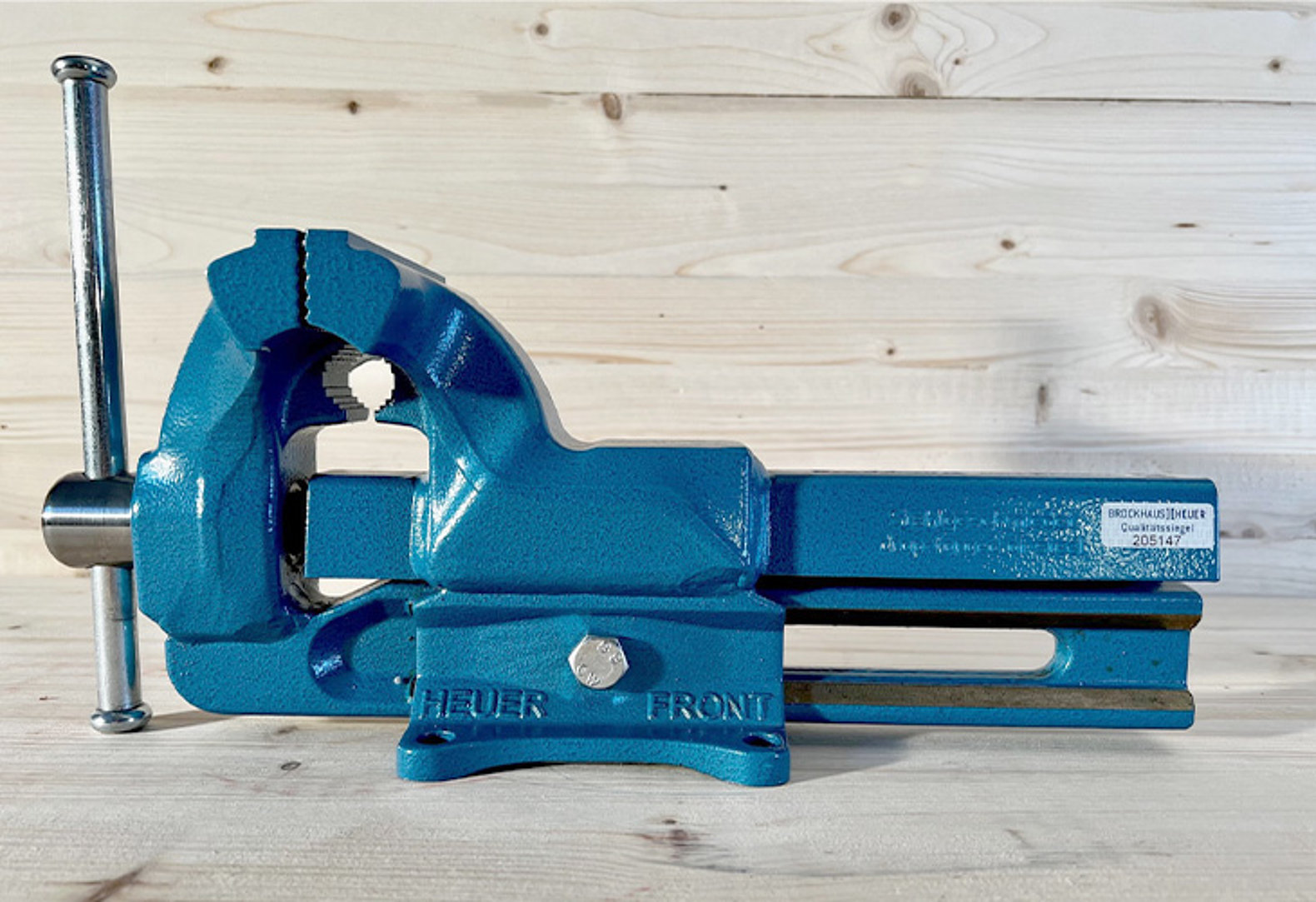
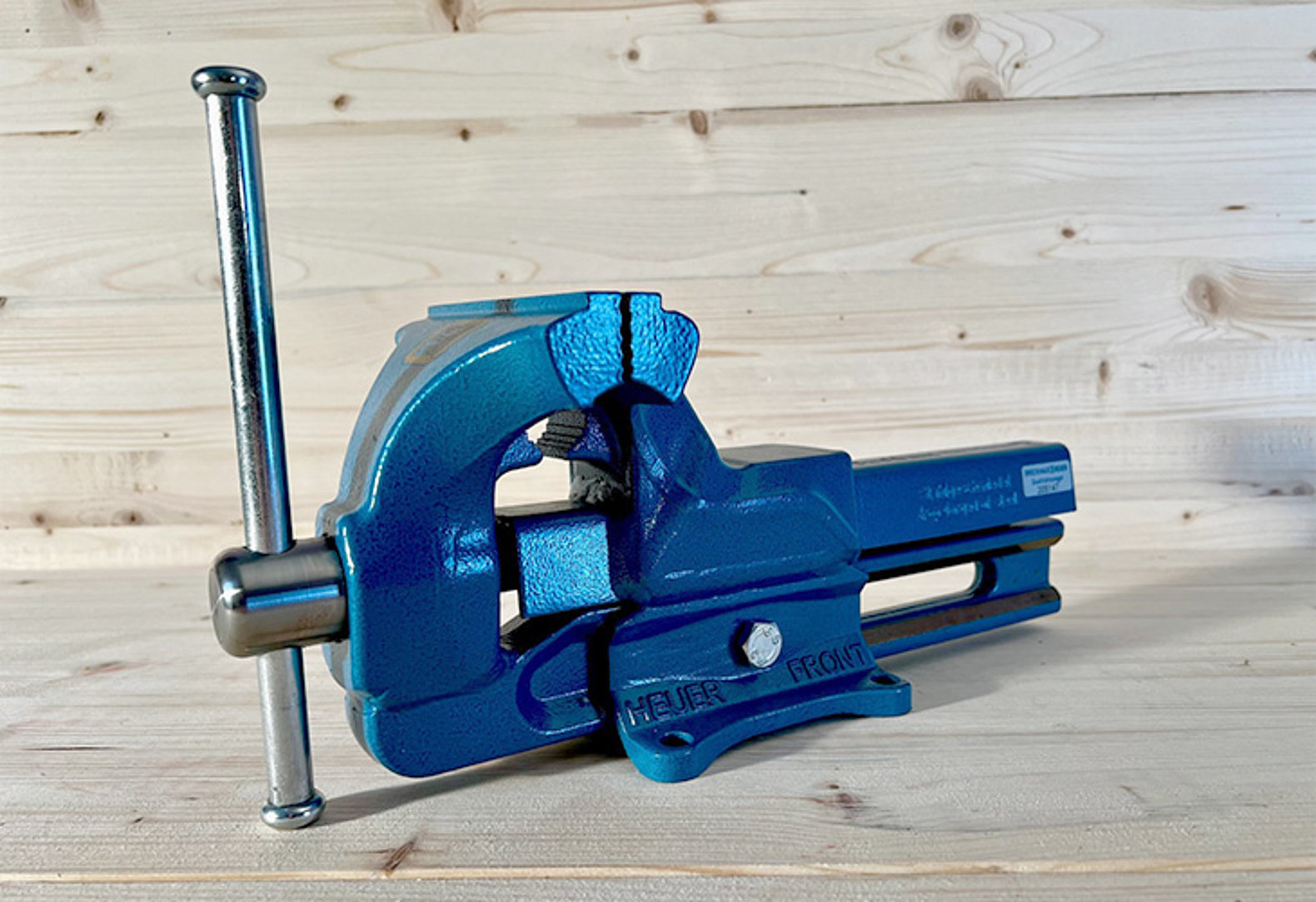
HEUER Forged-Steel Vice, Adjustable via a Central Adjustment Screw – Made in Germany
The HEUER vice is forged entirely from steel and is therefore guaranteed unbreakable. Thanks to the excellent properties of the material, this model can withstand enormous clamping forces while remaining comparatively lightweight and compact.
The guide consists of a sliding rail with four machined, prismatically arranged surfaces and two guide brackets, each with four machined guide surfaces.
The guide is adjusted using a single centrally positioned screw at the height of the sliding rail. This allows easy, precise adjustment without any sideways or vertical misalignment of the jaws.
The HEUER vice also features a precision bearing with minimal play in the front jaw.
Different Adjustable Guide Systems
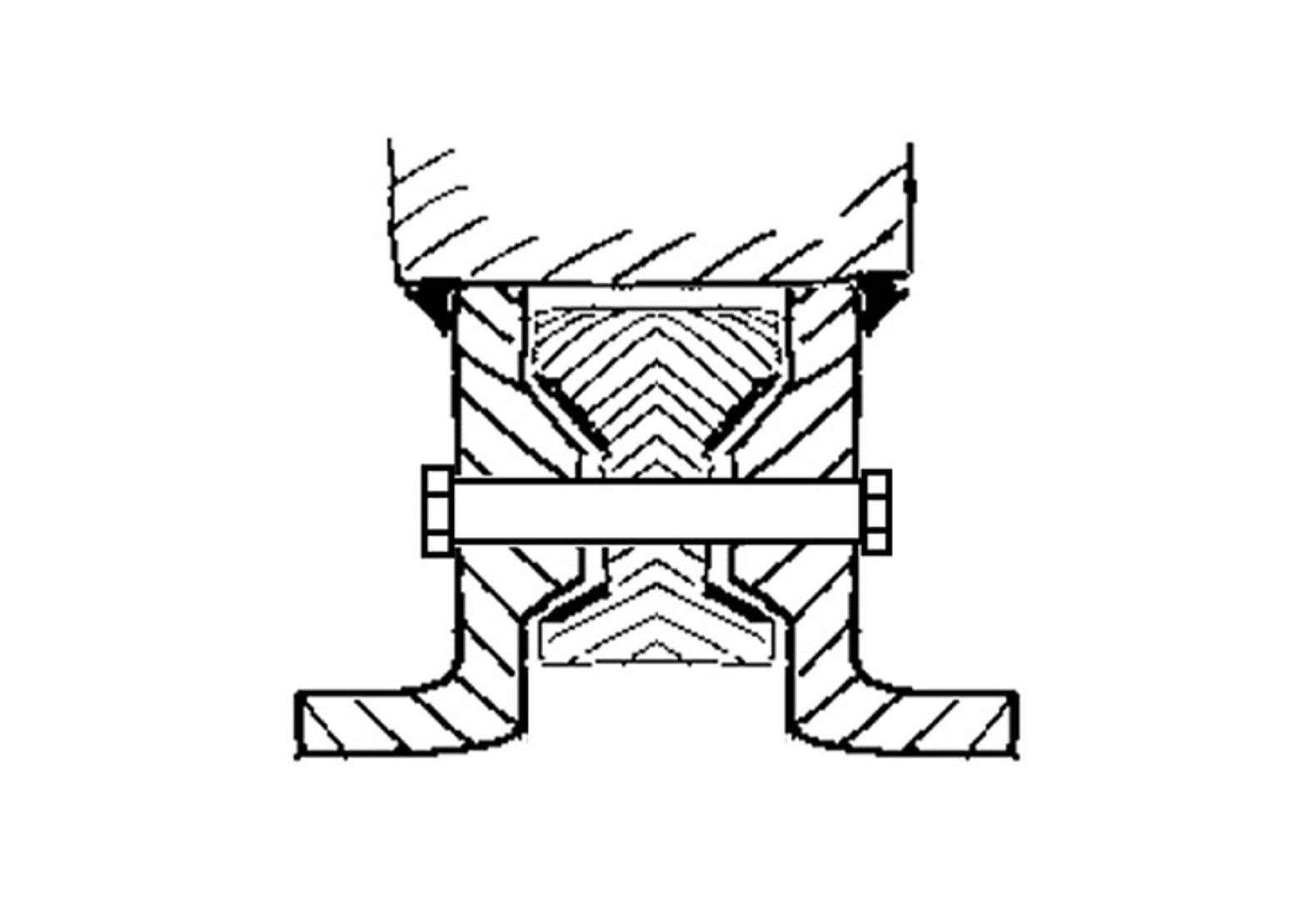
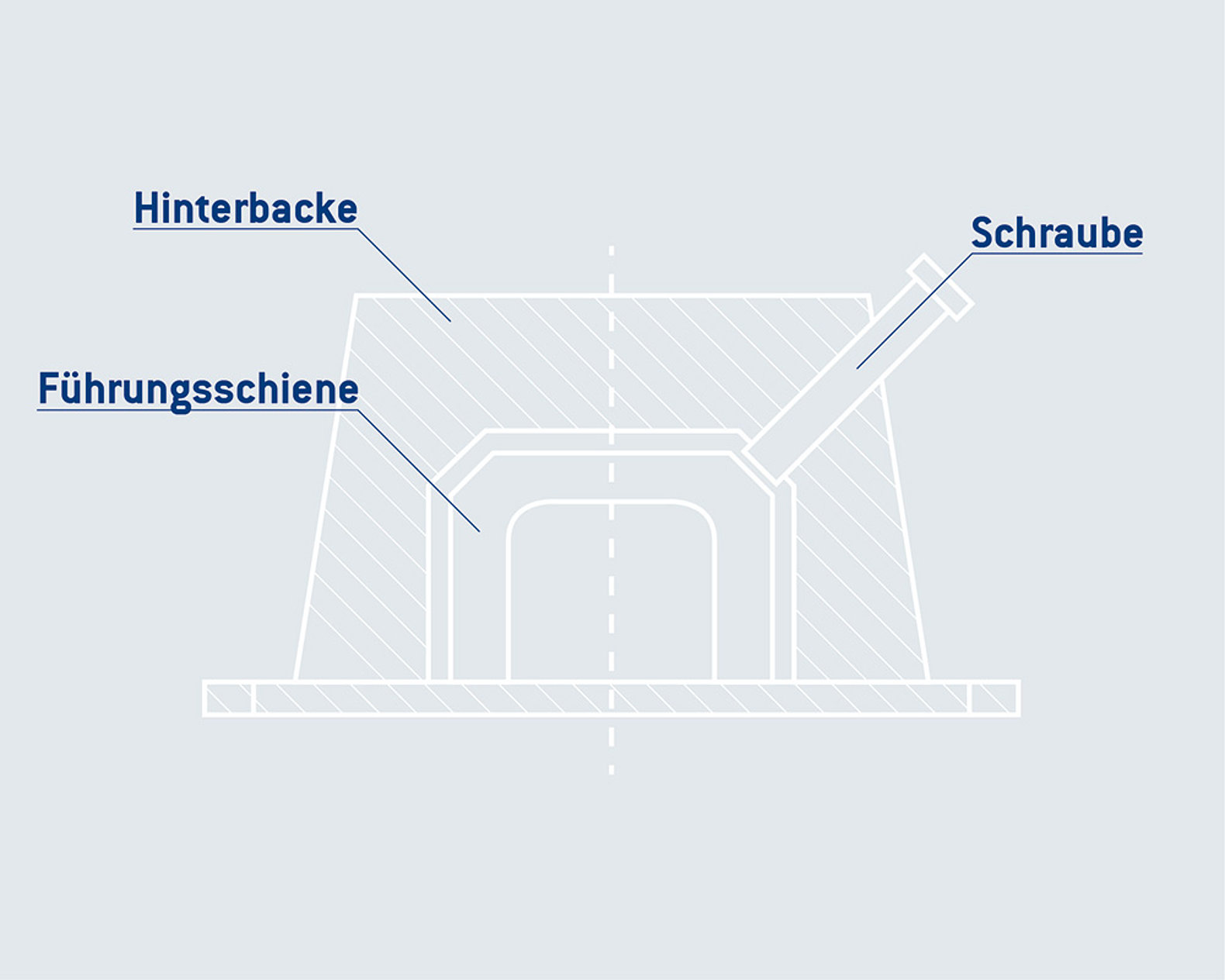
Vices on the market feature different guide systems, with corresponding differences in how they can be adjusted.
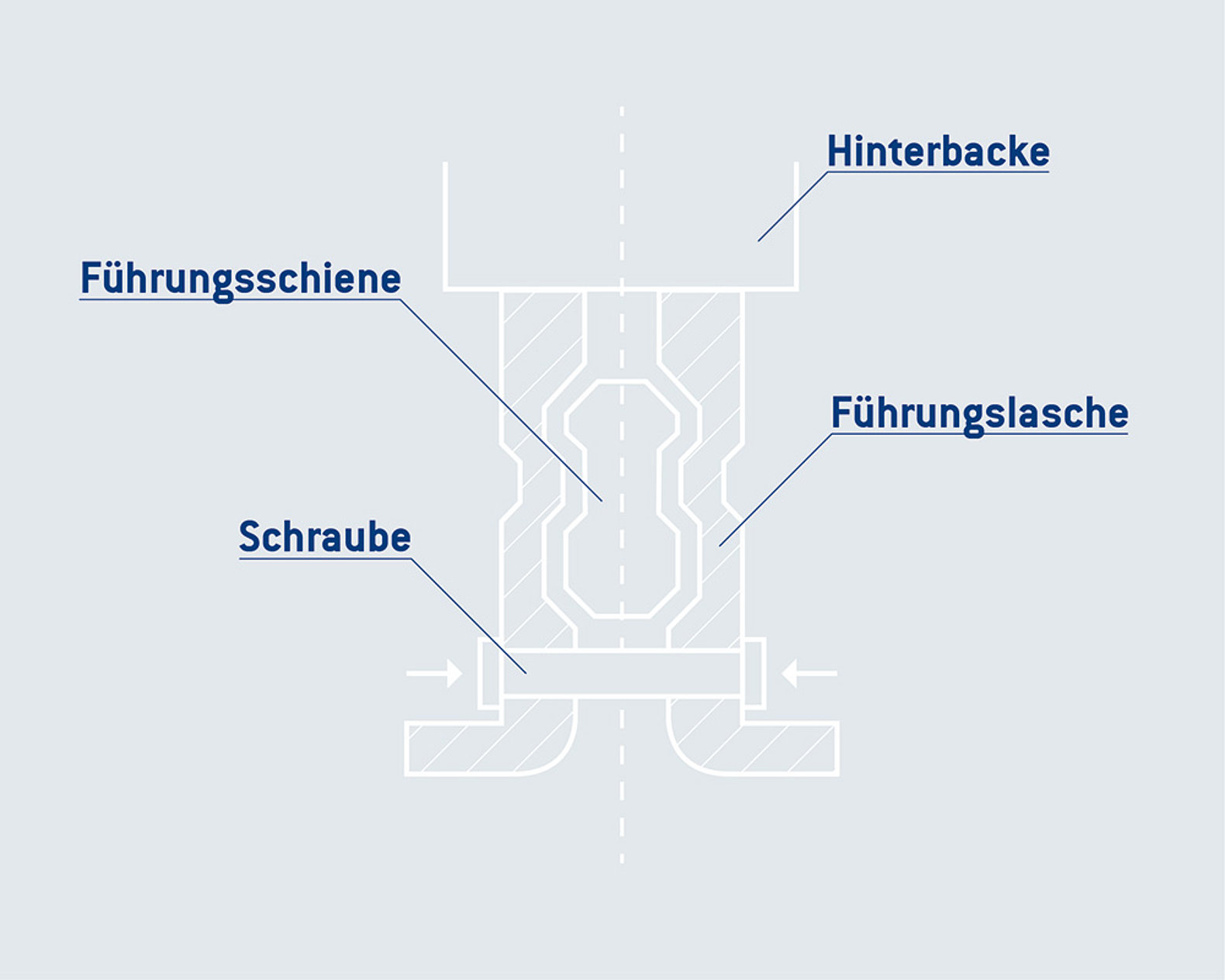
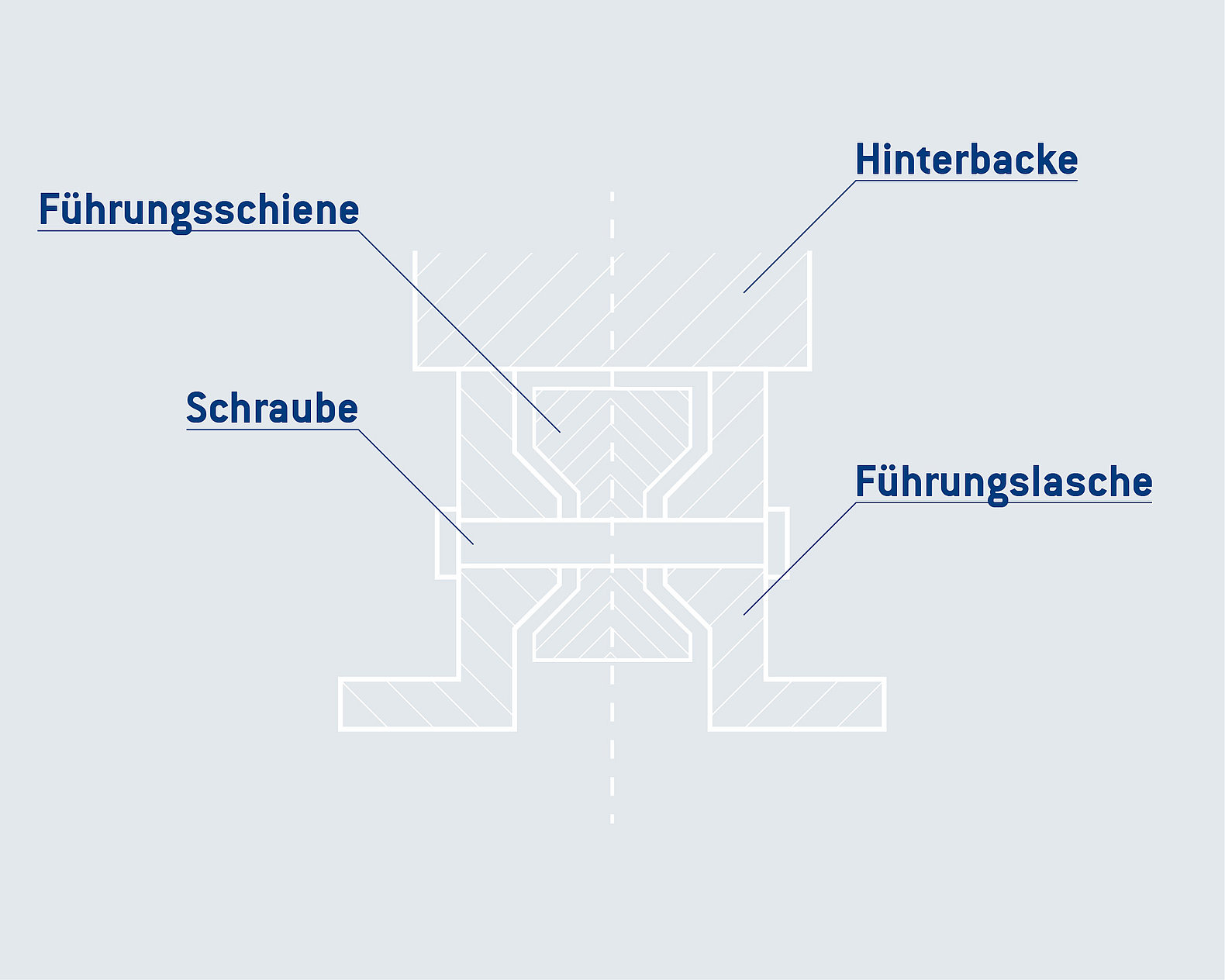
- -Adjustment using a side screw: This version can be found, for example, on vices that use a U-section as the guide rail. The screw presses sideways against the guide surface, pushing the front jaw out of alignment on one side.
- -Adjustment screw beneath the guide rail: This draws the guide brackets together beneath the guide rail. However, the upper sections of the brackets remain rigid, so clamping takes place on only four of the eight surfaces.
- -Adjustment screw centrally positioned within the guide rail (HEUER system): This design adjusts the guide centrally, bringing all eight surfaces into contact evenly. The vice therefore retains its parallel jaw alignment.
Vice Reviews and Tests
Configure Your Vice
Our configurator allows you to put together the right vice and matching accessories for your individual needs.
Choose from different sizes, materials and additional features to discover the ideal vice for your workshop.
Get started now and explore the wide range of options to create your own configuration. In just a few clicks, you can find the perfect clamping tool to support you in your projects.
